Elena Riedo, Psy.D.Licensed psychologist, CSAT, EMDR therapistFull Circle Recovery
A partner finds out. Or it is disclosed, and the ground shifts with almost no warning. For a while the house can feel unreal. Sleep thins. The mind goes back over a message, a receipt, a late night, a look that did not use to mean anything. People outside may treat this as a marital fight the couple should already know how to have. Inside, it often feels closer to the floor giving way.
That is not ordinary unhappiness between two adults. Discovery or disclosure of sexual betrayal—whether the acting out was pornography, affairs, escorts, or another pattern of compulsive sexual behavior—is often betrayal trauma. The person who had been a safe attachment became, without the partner’s knowledge, a source of threat. The nervous system does what it is built to do: shock, hypervigilance, intrusive images, a fierce need for facts, a need for a limit, a need to be believed.
After discovery of sexual betrayal—pornography, affairs, or other compulsive sexual behavior—many partners experience betrayal trauma: shock, hypervigilance, intrusive images, and a fierce need for facts and safety. Early work is usually individual stabilization with a clinician who understands sex addiction and partner injury, not immediate couples negotiation. The first session is an evaluation. It is not a decision about whether the marriage continues.
Not a co-addict
The injured partner did not cause this, and did not collude with a secret they did not have. What looks from the outside like “overreacting” is often a predictable traumatic stress response: the body looking for safety in a situation that no longer feels safe. Reality testing matters here. What was seen happened. Perception is not the problem. Naming the injury as trauma—not as a personality flaw, and not as co-addiction—keeps the work aimed at the right place.
A person does not have to already know whether to stay. There is no need to arrive with a speech, a timeline, or a decision about the relationship. It is enough to arrive as the person who found out.
What partners often need first
After discovery, thinking in a straight line is hard. The early work is usually not insight and not couples negotiation. It is:
Reality testing. What was seen happened. Perception is not the problem.
Safety. Emotional, physical, sexual, financial, and digital. Including whether contact, devices, and the shared home are tenable right now.
Stabilization. Sleep, panic, rage, collapse, and the swing between numbness and flood.
A limit. What the partner will and will not live with while more truth is still coming in.
A place of their own. Not a session that secretly belongs to the person who acted out.
Couples work too early can re-injure. So can being told to “focus on yourself” as if the betrayal were a communication problem. Stay-or-leave is a later question. So is formal disclosure. So is therapeutic separation, when structured space is needed rather than a silent walking-out. Later, if and when it is clinically indicated, there can be structured work: therapeutic disclosure rather than another round of partial truth, boundaries that restore a sense of reality, and only then questions of remembrance, mourning, and whether reconnection in the couple is possible. None of that is rushed. None of it is a promise about how the story ends.
Why a CSAT frame
A Certified Sex Addiction Therapist (CSAT) has completed supervised, multi-module training through the International Institute for Trauma and Addiction Professionals (IITAP). The credential is built for compulsive sexual behavior and for the injury to the partner—assessment, the cycle that drives acting out, staggered disclosure and trickle truth, and a sequence that does not begin joint sessions before there is one reality to stand on.
Partner-informed treatment takes the injured partner seriously, not as an accessory to someone else’s recovery. A CSAT frame takes the acting-out behavior seriously without making the partner the project manager of his program. The partner’s treatment belongs to the partner. EMDR is used when an older injury is still steering the present.
What the first call and first session are
Lorraine answers scheduling. A finished story is not required to pick up the phone. She will help with ordinary questions, find a time that can actually work, and place the caller with Dr. Riedo when this is the work that is needed. Details of the call are on When you make the call.
The first session is an evaluation: safety and stabilization, what happened, and how the truth has come in—including staggered disclosure, trickle truth, and the gaslighting that so often follows discovery. It is not a promise about how the story ends, and it is not a settlement of the marriage in one hour. A partner or family member may place the call. Related work on sex addiction treatment, pornography addiction, and infidelity remains available when it belongs there.
Reading for the partner
When the mind will not hold a straight line, a book can sit between sessions. These are written for partners, and for the weeks after discovery. They are not homework. They are not a substitute for being met.
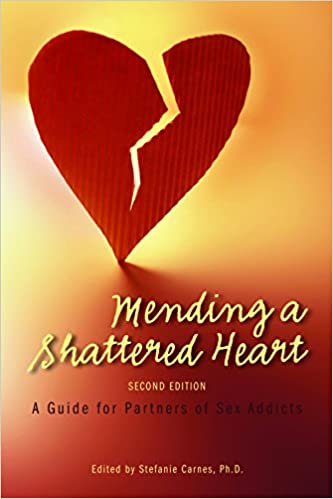
Mending a Shattered Heart — Stefanie Carnes, Ph.D., editor. A guide for partners of sex addicts, in a question-and-answer form that can be opened in the middle of a hard week.
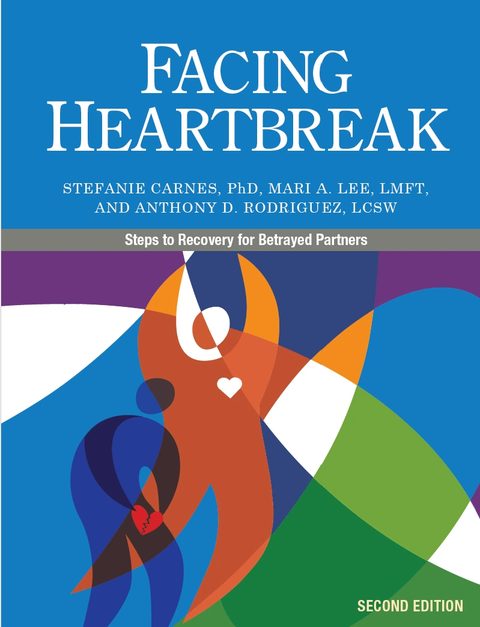
Facing Heartbreak — Stefanie Carnes, Mari A. Lee, Anthony Rodriguez. A workbook for betrayed partners, using a task model after discovery.
Courageous Love — Stefanie Carnes, Ph.D. A couples guide after betrayal, when both adults are still in the work.
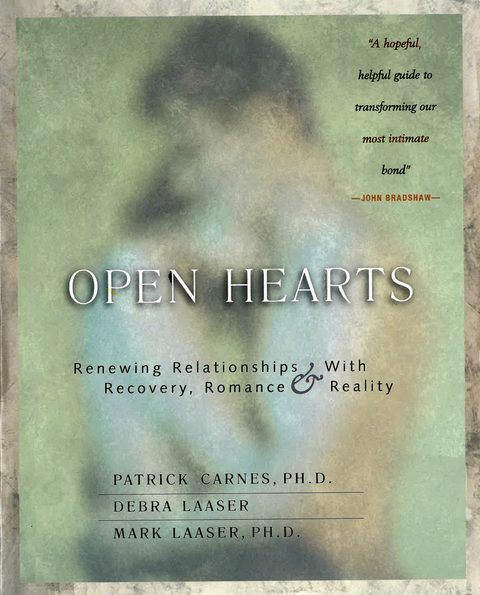
Open Hearts — Debra Laaser, Mark Laaser, Patrick Carnes. On the relationship after sexual addiction has come into the open.
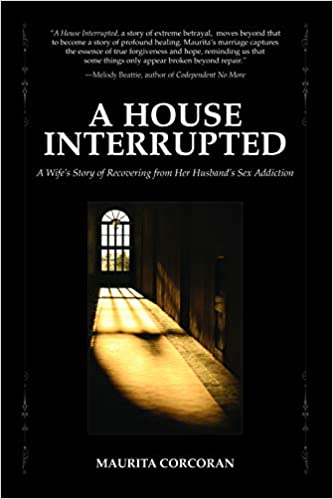
A House Interrupted — Maurita Corcoran. A memoir of discovery: a spouse, four children, and the weeks that follow.
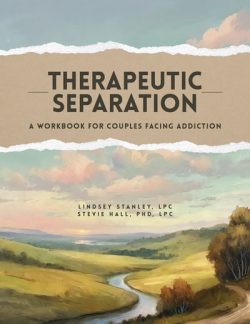
Therapeutic Separation — Lindsey Stanley, Stevie Hall. For partners who need space that is structured, not a silent walking-out.
On The Journey — Elaine VandeReis. Poems written after discovery, when prose will not hold.
Moving Beyond Betrayal — Vicki Tidwell Palmer, LCSW, CSAT. For the partner. Boundaries after discovery, in five steps, so the house is not run by the next crisis.
The Betrayal Bind — Michelle Mays, LPC, CSAT-S. Second edition. For the partner after sexual betrayal or infidelity: the attachment bind when the person who was supposed to be safe is also the source of the deepest injury.
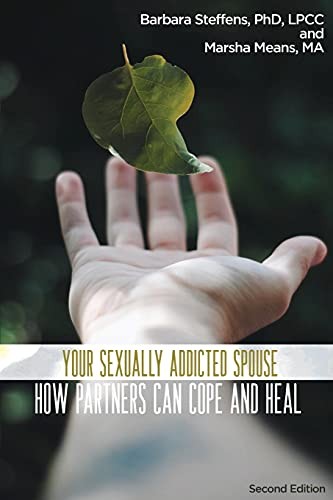
Your Sexually Addicted Spouse — Barbara Steffens, Ph.D., and Marsha Means, M.A. For partners after sexual addiction has come into the open: why the injury is trauma, not codependency, and what helps a betrayed spouse begin to stabilize.
Dr. Riedo spoke with NBC 5 Dallas–Fort Worth as a clinical psychologist on high-speed online pornography. The interview is on her clinical page as a media record: Elena Riedo, Psy.D.
Adults 18+. Scheduling Monday through Friday, 9 a.m. to 4 p.m. Fees, insurance, and booking details: contact.html.